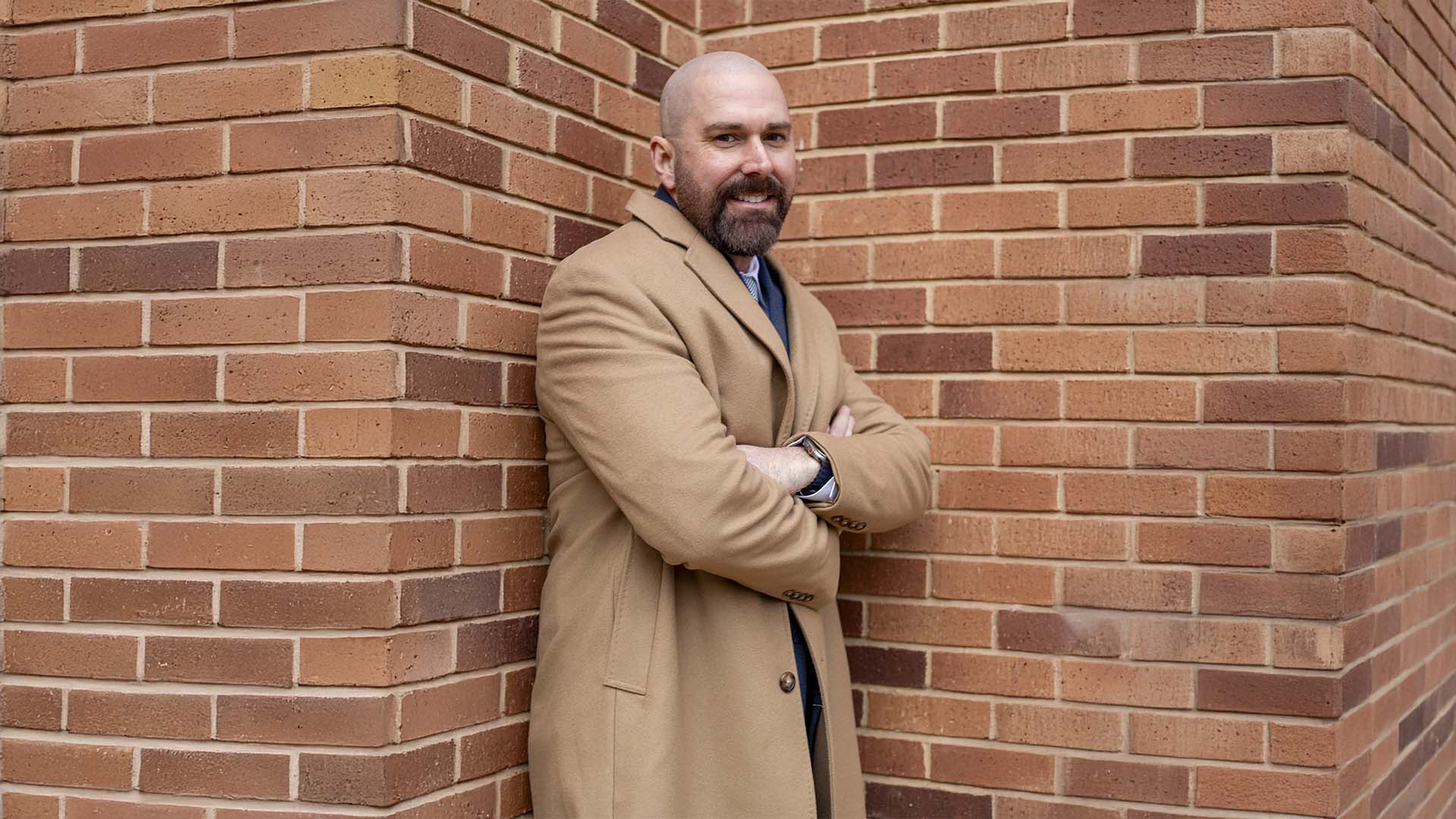
Healthcare transformation has a reputation for moving slowly. The systems are complex, the stakes are high, the regulations are unforgiving, and the culture is resistant in ways that technology alone cannot overcome. Eric C. Gardner, Vice President of Operations at Leidos QTC, Fellow of the American College of Healthcare Executives, and retired U.S. Air Force Medical Service Corps Officer, has led transformation across military medicine, value-based care startups, and a $200 million enterprise program. His perspective on what it actually takes to move a healthcare organization is shaped by two decades of doing it under conditions that leave no room for ambiguity. “Healthcare transformation is like turning a ship,” Gardner says. “It’s slow, massive, and every degree matters.”
Anchor Change in Purpose
The first mistake Gardner sees in healthcare transformation efforts is leading with the infrastructure rather than the mission. Technology investments, process redesigns, and digital modernization initiatives get positioned as the transformation itself, when they are only the mechanism. Without a clear clinical purpose driving every decision, efforts to change lose coherence and clinician trust simultaneously.
At WellMed, Gardner anchored every digital shift to a single mission: delivering better care to seniors. That meant leading with clinical insight rather than IT priorities, ensuring that every operational change could be traced directly back to patient outcomes. The results were concrete. A $500 million lift in RAF performance and $27 million in real workflow savings, driven not by technology deployment alone but by the clarity of purpose that shaped how that technology was introduced and adopted. “Transformation is not about cost or codes,” Gardner says. “It is about people.” In healthcare, where clinician buy-in determines whether any initiative survives contact with the frontline, that distinction is not philosophical. It is operational.
Scale Trust Before You Scale Tools
The second principle Gardner applies inverts the sequence most transformation programs follow. Technology is an easy purchase. It arrives with a timeline, a budget, and a vendor committed to implementation. Culture does not come with any of those things, and no technology investment delivers its intended return inside an organization that does not trust it.
At Leidos QTC, before modernizing a 600,000-plus annual exam program for the Department of Defense, Gardner focused on frontline operations first. The systems built were ones the teams believed in, designed around the realities of the people using them rather than the preferences of those deploying them. That sequence produced a 10% labor cost reduction and $12 million in revenue growth in under twelve months.
“Technology is the easy buy,” Gardner says. “But culture is not.” The leaders who close that gap consistently are those who treat trust as a precondition for technology adoption rather than a byproduct of it. In federal healthcare environments, where the margin for operational disruption is narrow, that discipline is not optional.
Make Performance Visible
The third principle is where transformation either sustains itself or quietly loses momentum. Strategy documents and implementation roadmaps create initial alignment. What sustains transformation through the friction of execution is visibility, specifically the kind of real-time performance data that connects daily decisions to organizational outcomes at every level.
At Flagship Health, Gardner embedded KPIs across the entire organization, from the call center to the C-suite. That visibility made performance a shared language rather than a leadership abstraction, enabling the organization to scale operations and open new clinics by turning insight into action at the speed the growth required. “Transformation does not live in strategy decks,” Gardner says. “It lives in dashboards.” When every function can see its contribution to the larger outcome, accountability becomes structural rather than managerial.
Doing What Matters Better
The throughline across Gardner’s transformation experience, from military medicine to value-based care to federal health programs, is a consistent philosophy about what change actually requires. Not more activity, more focus. Not more technology, more alignment between the tools being deployed and the mission they are meant to serve. “It is not about doing more,” Gardner says. “It is about doing what matters better. Start with purpose, build with people, lead with clarity.” In an industry as complex and consequential as healthcare, that discipline is the difference between transformation that holds and change that fades.
Follow Eric C. Gardner on LinkedIn or visit his website or his company’s website for more insights on healthcare transformation, operational excellence, and enterprise leadership.