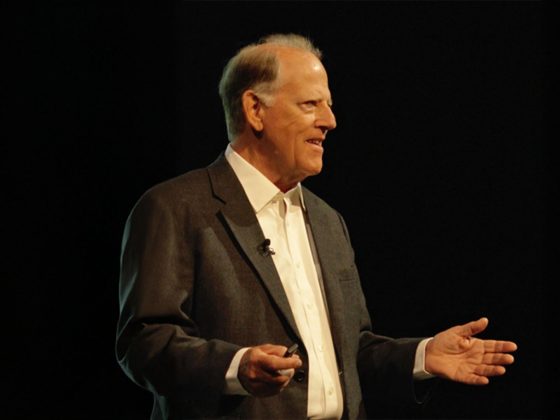
When revenue dips, targets are missed, forecasts tighten, and almost immediately, sales get the blame. Greg Kish has seen this pattern play out repeatedly over two decades of leading revenue strategy in high-stakes environments, from SoFi Stadium at Hollywood Park to global expansion initiatives influencing more than five billion dollars in revenue. As founder and managing partner of Fusion Advisors, he argues that most organizations misdiagnose the problem from the start. “Most companies don’t really have a sales problem,” Kish says. “They have a revenue design problem.”
Sales Is the Output, Not the System
When performance falters, the instinct is to push harder. This means more calls, more pressure, higher quotas, and tighter oversight. But sales, Kish explains, are the visible output of a much larger system. If that system is misaligned, no amount of pressure at the front line will sustainably correct it. “Sales is just the visible output of a much bigger designed system,” he notes.
Revenue is shaped upstream by how teams are structured, how products are positioned, how pricing aligns with value, and how decisions flow across the organization. If the org chart creates friction, if marketing tells a different story than product delivers, or if pricing stalls conversations, sales teams are forced to swim upstream regardless of their talent. “You can fix the structure,” Kish says, “and performance usually follows.”
Storytelling as Revenue Infrastructure
A common mistake, in Kish’s view, is treating storytelling as branding rather than as a core revenue lever. “You can have an incredible product,” he explains, “but if the market doesn’t fully understand the value, you’re working harder than you need to.” At Fusion Advisors, storytelling is considered part of revenue design itself. It clarifies who the offering is for, why it matters, and why now. That clarity reduces internal confusion and external hesitation. When narrative aligns with real business outcomes, rather than feature lists, then decision-making accelerates, sales cycles shorten, and confidence rises across teams. “Storytelling isn’t fluff,” Kish says. “It becomes leverage.”
Velocity Over Volume
Another structural flaw Kish frequently encounters is an overemphasis on volume. Organizations chase more leads, bigger pipelines, and higher activity metrics, assuming growth will follow. In fast-moving markets, he argues, velocity is the differentiator. “Velocity is what wins,” he says. “And efficiency around that velocity.” Velocity shows up in practical ways: decisions are made faster, ownership is clear, pricing does not stall deals, and cross-functional debates do not derail execution. The revenue engine feels cohesive rather than forced.
To achieve that cohesion, Fusion Advisors centers its work around six core pillars: purposeful timelines, the right people in the right roles, product positioning, process alignment, data-driven revenue marketing, and disciplined storytelling. Underneath it all, Kish emphasizes four principles: clarity, authenticity, momentum, and precision. “When those are aligned,” he says, “revenue moves with purpose. There’s no panic.”
Look Upstream
For leaders evaluating underperformance, Kish offers a direct challenge. “If your sales team is underperforming, don’t just stare at a dashboard,” he advises. “Look upstream.” Ask whether the revenue system is designed for the market as it exists today. Are structures aligned with strategy? Does pricing reflect value? Is the narrative consistent across touchpoints? Do teams know exactly who owns each stage of the customer journey? Fusion Advisors does not approach engagements by simply fixing sales. Instead, the firm steps back to assess the entire revenue design, then architects a structure that allows growth to scale calmly, predictably, and with momentum.
In volatile markets, pressure alone rarely produces sustainable results, but design does. “You don’t fix revenue by pushing harder,” Kish says. “You fix it by designing a system that allows it to scale.” For organizations at pivotal moments, the question is not whether sales need to work harder. It is whether the revenue system itself is built to win.
Follow Greg Kish on LinkedIn or visit his website for more insights.