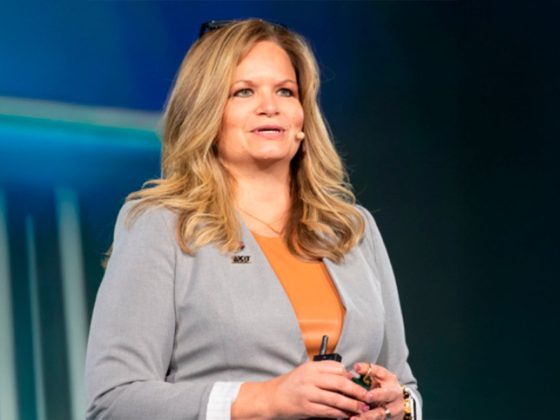
Cloud transformation is one of the most expensive and disruptive initiatives an enterprise will undertake. Yet too many organizations treat it as a technology upgrade rather than a business inflection point. Natalie Romano, Head of Sales Engineering for North and South America, has spent more than 20 years guiding enterprises through complex, high-stakes cloud transitions.
According to Romano, cloud is not a destination. It is a disruption. And when led correctly, it becomes a powerful accelerator. “Cloud isn’t just about where your systems run,” she explains. “It’s about how your organization operates.” For leaders navigating this shift, Romano focuses on three principles that consistently determine success.
Clarity Over Complexity
Cloud migrations often drown in jargon, overengineering, and competing priorities. Technical roadmaps expand while executive alignment contracts. Romano starts somewhere simpler. “What are we really solving for?” she asks. In her work, every transformation is anchored to visible business value: faster service delivery, more intelligent data utilization, improved decision velocity, or measurable cost reduction. When stakeholders can clearly see the outcome, momentum builds.
Complex programs do not have to be confusing. Clarity reduces resistance. It sharpens prioritization and allows cross-functional leaders to move with purpose rather than hesitation. Clarity, Romano argues, is a leadership discipline.
Architect the Change, Not Just the Technology
A common failure point in cloud programs is overemphasis on platforms and underinvestment in adoption. “A successful cloud strategy isn’t just about technology,” Romano says. “It’s about people and process.” Organizations frequently underestimate the behavioral shift required. New environments introduce new ways of working, new security models, new workflows, and new accountability structures. Without deliberate enablement, even the most elegant architecture underperforms.
Romano designs transformation journeys that support users through the shift. This includes targeted enablement, defined use cases, and real-time feedback loops that allow adjustments before friction compounds. The results are measurable. In one program, this approach drove a 92% activation rate within the production window. Not simply deployment, but meaningful usage. Adoption is not accidental. It is engineered.
Lead Through Collaboration, Not Commands
Cloud transformation cannot be delegated. It must be led. Romano emphasizes that successful programs are built on collaboration across sales, IT operations, customer experience, and executive leadership. “Cloud transformation isn’t a handoff,” she notes. “It’s a handshake.”
In one of her most successful engagements, transformation specialists were embedded directly within the customer’s team rather than operating as an external advisory layer. This integration created faster feedback cycles, stronger accountability, and shared ownership of outcomes. The impact was a 76% increase in adoption across the portfolio. When leadership shifts from directive oversight to collaborative execution, resistance declines and velocity increases. Transformation becomes a shared mission rather than an imposed mandate.
Don’t Just Migrate. Mobilize.
Cloud transformation will continue to define enterprise strategy in 2026 and beyond. But organizations that treat it as a lift-and-shift exercise risk missing its strategic potential. “Don’t just migrate,” Romano advises. “Mobilize.” Because when transformation is led, not merely managed, it does more than modernize systems. It multiplies value.
For more insights on leading organizations through complex cloud transformations, connect with Natalie Romano on LinkedIn or visit her website.