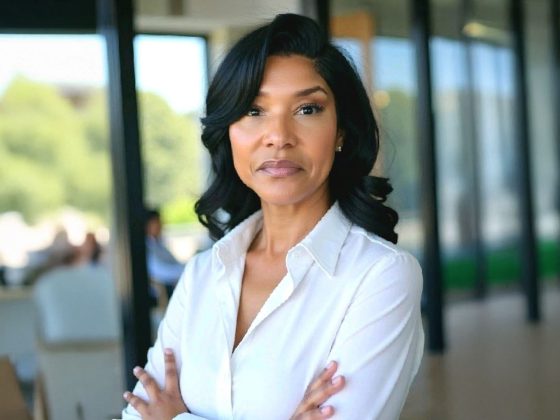
When a team is underperforming, the instinct is almost always the same. Find the weak link, address the difficult person, and fix the individual. Rhonda Parmer, founder of the Leadership Executive Group and a leader with more than three decades of experience in public education, from substitute teacher to associate superintendent, has spent her career challenging that instinct. In her experience working with leaders across industries, the diagnosis is wrong far more often than leaders realize. “Leadership problems are rarely people problems,” Parmer says. “They’re alignment problems.” That reframe, simple as it sounds, changes everything about how a leader diagnoses what is going wrong, and what they choose to do about it.
Clarity Reduces Chaos
The first pattern Parmer has observed consistently in high-performing leadership teams is a commitment to clarity, not as a communication style, but as a structural discipline. When priorities are unclear, and the reasoning behind decisions goes unexplained, teams fill the vacuum with assumptions, speculation, and competing interpretations of what actually matters.
Early in her career, Parmer found herself in exactly that situation. Sitting in a leadership meeting with a room full of smart, committed, hardworking people, the conversation was stuck. “We were circling and not really getting anywhere,” she says. The problem was not effort; everyone cared deeply. The problem was that no one was aligned on the priority. “Once we clarified that goal and everyone understood their roles, the energy in the room changed immediately. Decisions came faster. Progress followed.”
That moment shaped her entire approach to leadership. “When leaders communicate clear priorities and explain the why behind their decisions, teams stop guessing, and they start moving in the same direction.” Clarity, in Parmer’s framework, is not a nicety. It is the precondition for everything else.
Trust Strengthens Alignment
The second practice Parmer identifies is one that becomes most visible and most critical under pressure. When conditions are difficult and uncertainty is high, teams do not look to policy documents or strategic frameworks for stability. They look to the person leading them.
“When pressure rises, people don’t follow policies,” Parmer says. “They follow leaders they trust.” That trust is built through specific, repeatable behaviors; listening genuinely, staying visible, and treating people with consistent respect regardless of circumstance. Leaders who do this build the kind of relational foundation that keeps teams cohesive when everything else is shifting.
The connection between trust and alignment is direct. Teams that do not trust their leaders withhold information, hedge their commitments, and default to self-protective behavior. Teams that do trust their leaders bring their full capacity to shared problems. The difference in output between those two states is not marginal. It is the difference between a team that functions and one that performs.
Keep the Mission Visible
The third practice is one Parmer describes as a communication adjustment with outsized impact. Day-to-day leadership is inevitably consumed by immediate challenges, operational fires, personnel issues, and decisions that cannot wait. The leaders who sustain high performance over time are the ones who never let that daily noise fully displace the larger purpose.
“Great leaders manage daily challenges, but they continually reconnect their team to the larger purpose,” she says. “When people understand how their work contributes to something meaningful, performance rises naturally.” That reconnection does not require elaborate initiatives or formal programs. It requires intentional, consistent communication that keeps the mission in the room, even when the agenda is full of everything else.
When Alignment Is the Work
Across three decades of leading and coaching leaders, Parmer’s conclusion is consistent: the teams that struggle are rarely struggling because of the people on them. They are struggling because the conditions for alignment, clarity, trust, and shared purpose were never fully established.
“Leadership is not about avoiding the storms,” she says. “It’s about creating alignment so that your team can navigate together.” For leaders who have been working harder without seeing results, that is often the most important shift available to them. Not a new strategy. Not a personnel change. Alignment, and the clarity, trust, and purpose that make it real.
Connect with Rhonda Parmer on LinkedIn or visit her website for more insights on executive alignment and leadership transformation.