A seller who reviews a real estate commission is only seeing half the transaction. What the client sees is the percentage charged for selling the home. What the client almost never sees is the second commission sitting behind it, the cut a brokerage takes from the agent’s earnings before the agent ever pockets a dollar.
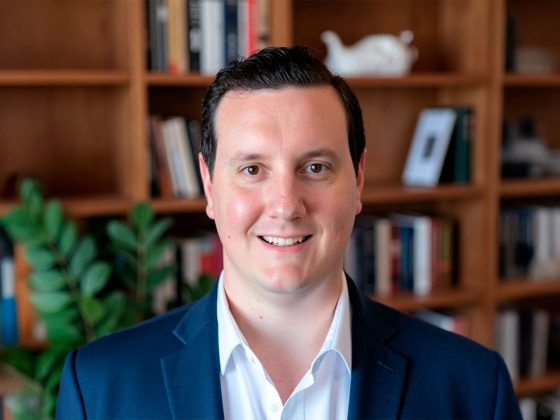
Justin Santolaya, a San Diego REALTOR® with 15 years in the business, has watched that hidden split shape the entire commission landscape more than any single market trend. “A lot of agents can not offer discounts or reductions in commission simply because their brokerages are taking a substantial cut from their commissions. This means that agents cannot pass on any savings to their clients,” he explains. As home prices climbed, the visible commission stayed remarkably sticky for years, not because agents were reluctant to compete, but because the hidden split behind the scenes left many of them with no room to try.
The Old Model Assumed Prices That No Longer Exist
For decades, the standard structure asked a seller to pay a total of 6% – split 3% to the listing agent and 3% to a buyer’s agent – a formula built when home prices were a fraction of what they are today. On a modest property, 3% was a manageable figure. On the price points common in San Diego now, that same percentage translates into a commission large enough to materially change what a seller walks away with at close.
The market has already begun correcting the most obvious part of this. Buyers are now typically responsible for their own agent’s commission rather than having it baked into the seller’s side, which has narrowed what sellers are paying for directly. Listing commissions themselves have been sliding gradually, from the traditional three percent down to a more common 2%–2.5%. This shift did not happen because brokerages decided sellers deserved a better deal. It happened because price points made the old percentage impossible to defend, and market pressure eventually forced the number lower.
The Real Constraint Was Never the Client’s Price. It Was the Split Behind It
At major franchise brokerages, the brokerage itself takes a share of whatever commission an agent earns, and that share can run anywhere from 10% to 50%. An agent quoting a client for 2.5% commission may be operating on much less once the brokerage’s cut is removed, which leaves little room to discount further without the agent’s own earnings collapsing.
This is the actual mechanism behind commission stickiness, and it explains a pattern that otherwise looks strange. Prices rose for years, making a fixed percentage commission worth more in absolute dollars, and yet the percentage itself barely moved at the biggest brokerages.
The reason is that the visible commission was never the full economics of the deal. The brokerage split sat underneath it as a hidden floor, and until that floor moved, no amount of pressure on the visible number could translate into real savings for the client. Santolaya’s own shift illustrates the point directly. Only once his company began reducing its internal commission splits could the savings actually reach the seller rather than disappearing into the brokerage’s share first.
A 1% Listing Is What Happens When the Hidden Floor Finally Drops
Understanding the hidden split changes how a 1% listing structure should be read. It is not simply an aggressive discount an agent decided to offer. It is what becomes possible once the brokerage’s share of that commission has been significantly reduced. This then frees the agent to pass real savings on rather than personally absorbing an unsustainable cut.
“With our 1% listing structure, our clients only pay one percent of the purchase price,” Santolaya notes, and on the price points typical of the San Diego market, that difference against a traditional 2.5% or 3% structure can represent a substantial amount of money staying with the seller at close,
The broader shift reaches beyond any single brokerage. Flat-fee platforms, salaried agent models, and higher-volume teams are all converging on lower listing commissions for the same underlying reason, because each has found a way to shrink or eliminate the hidden split that kept older models expensive. Santolaya expects the trend to continue, with listing commissions likely drifting from 2.5% toward 2% or lower in the coming years as more of the industry adopts structures built around that principle.
For a seller evaluating a listing agent today, the real question was never ‘What percentage is being charged?’ It is what happens to that percentage before it reaches the person doing the work. This is because that hidden split, more than any other single factor, determines how much of a sale price a seller keeps.
If you have questions about listing structures or want a free home evaluation, reach out to Justin Santolaya on LinkedIn to learn more about how San Diego sellers can net more on their next sale.