Most supply chains fail not because of poor planning but because their physical infrastructure can’t move as fast as their business needs to.
Companies invest heavily in warehouse management systems, automation, and labor optimization, then watch helplessly as demand surges, inventory piles up, and their fixed real estate becomes the bottleneck.
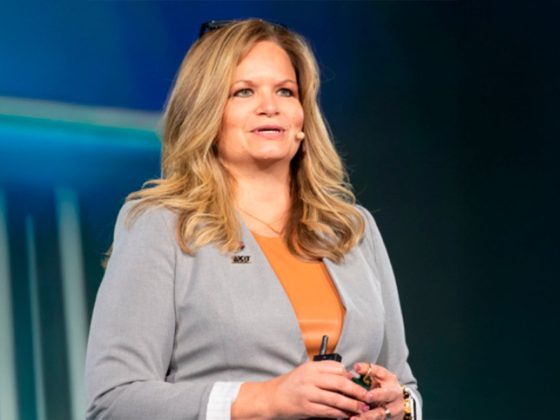
Jonathan N. Brooks, CEO of Warehouse on Wheels (WoW), has spent 20 years leading companies through high-stakes transformations and private equity exits.
At WoW, Brooks and his team serve over 7,000 manufacturers, retailers, and distributors across North America, solving what he calls “one of the most overlooked yet mission-critical problems in logistics: running out of space.”
Fixed Infrastructure Is a Hidden Risk
The breakdown starts with real estate. Companies lock into multi-year warehouse leases based on demand forecasts that become obsolete within months. When demand spikes, they scramble for additional space. When it drops, they’re stuck paying for capacity they don’t need. Either scenario erodes margins and limits agility.
“Too many companies still rely on fixed warehouse space, which is slow to expand, locked into long leases, and rigid when demand shifts,” Brooks explains after working with a consumer goods manufacturer facing seasonal volatility. “In today’s volatile market, that model breaks. Demand moves faster than your real estate can, and when disruption hits, you can’t adapt fast enough.”
According to industry research Brooks references, 94% of companies report revenue hits from supply chain disruptions. Long lead times, labor shortages, and physical bottlenecks cripple flexibility. Yet most supply chain investment still flows toward software, automation, and process optimization, ignoring the foundational constraint of physical space.
Add a Modular Capacity Layer That Scales on Demand
Brooks’s solution isn’t replacing traditional warehouses; it’s adding a flexible layer that scales independently. WoW provides mobile, modular storage capacity deployed within 48 hours and available on 30-day terms. No construction, long-term leases, or capital expenditure on facilities that might be unnecessary in six months.
“Think of your warehouse stack like layers,” Brooks explains when describing the model to operations leaders. “At the top, you’ve got automation and robotics. In the middle, the people and processes. But the foundation is the physical layer. That’s where most companies get stuck.”
WoW’s trailers function as a utility layer, safe, climate-controlled capacity that expands and contracts with business needs. The company isn’t a third-party logistics provider or a warehouse management software vendor. It’s infrastructure that moves with the business rather than constraining it.
The impact shows up most clearly during crises. One automotive client avoided a full production shutdown by deploying contingency trailers within minutes when a supply disruption threatened to halt assembly lines. “They had the trailers ready to deploy in minutes,” Brooks recalls. “Without that flexible capacity, the entire production line would have stopped.”
The Financial Case for Flexible Infrastructure
The business case is straightforward. Compared to traditional warehouse space, WoW delivers up to 4x operating savings and a modeled ROI of 81% over five years. But Brooks emphasizes the value extends beyond dollars. “It’s not just about cost, it’s about execution,” he notes. “Whether you’re in manufacturing, retail, or logistics, you can’t afford to be caught flat-footed.”
That execution advantage materializes in multiple ways. Companies can test new markets without committing to permanent facilities. They can absorb unexpected inventory without emergency leasing at premium rates. They can scale down during slow periods without breaking leases or leaving space underutilized.
The flexibility creates optionality. And in volatile markets, optionality is what separates resilient supply chains from brittle ones.
Complexity Kills Momentum
Building a shock-proof supply chain isn’t about adding more complexity. It’s about creating infrastructure that adapts as fast as the business needs to. “Complexity kills momentum. The best leaders simplify problems, adapt fast, and execute without delay,” Brooks concludes.
Fixed real estate made sense in stable markets with predictable demand. Those conditions no longer exist for most businesses. The companies that thrive in this environment aren’t the ones with the biggest warehouses; they’re the ones with the most flexible capacity.
Because when disruption hits, speed and adaptability matter more than scale.
Connect with Jonathan N. Brooks on LinkedIn for more insights.