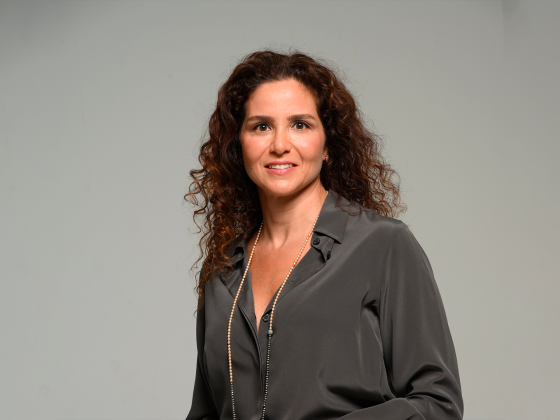
The most technically sophisticated clinical insight is worth nothing if the patient cannot act on it or the physician cannot integrate it into their day. Paul Mastoridis, a pharmaceutical and medtech executive with over 25 years leading global teams across drug development, medical affairs, and digital health innovation, has built his career around a problem that sounds straightforward and rarely is: how do you take complex medical knowledge and translate it into something genuinely usable? “Medical innovation is often about what you can remove, not what you can add,” Mastoridis says. “When we distill complex insights into tools that are simple, accessible, and intuitive, we unlock real-world outcomes.”
The Patient Experience Is the Design Brief
Clinical data tells you what needs to happen. It does not tell you how to make it happen for a patient managing a chronic condition in their home, without a clinician present, often under stress. At Novartis, the problem was poor inhaler technique among cystic fibrosis patients; a clinical issue with measurable consequences for drug delivery and outcomes. The solution was not more detailed instructions or additional data. It was a whistle device that provided an audible cue guiding patients to inhale correctly in real time.
The intervention worked because it met patients where they actually were rather than where the clinical ideal assumed them to be. No additional cognitive load. No new behavior to learn. A simple sensory signal that turned a complex pharmacological requirement into an intuitive action. That design philosophy, translating science into something a patient can do naturally, is what separates tools that change outcomes from tools that demonstrate technical capability without improving care.
Reducing Cognitive Load Is the Real Clinical Innovation
Physicians are not underperforming because they lack access to clinical data. They are overwhelmed by it. The diagnostic tools that make the most meaningful difference are not the ones that present clinicians with more information. They are the ones that surface the right signal at the right moment and automate the steps that slow care down without adding clinical value.
Working on an AI-enabled tool designed to differentiate asthma from chronic obstructive pulmonary disease (COPD), Mastoridis and his team built it with that constraint in mind. The goal was not to impress clinicians with the sophistication of the underlying model. It was to integrate directly into physician workflows, reduce the cognitive burden of differential diagnosis, and support day-to-day management without requiring clinicians to change how they work.
“Great clinical tools do not lecture,” Mastoridis says. “They simplify, personalize, and guide so physicians can focus on the patient, not the process.” The measure of success was not technical accuracy in isolation. It was whether the tool made the right decision easier to reach in the time a clinical encounter actually allows.
Complexity Requires More Than One Discipline to Simplify
No single department produces a tool that patients use and physicians trust. At Novartis, building connected inhaler systems that improved adherence and reduced hospital visits required data scientists, physicians, software engineers, and behavioral experts working from a shared understanding of what the tool needed to accomplish in the real world. Medical affairs provided the clinical foundation. Design, technology, and patient feedback loops are what made that foundation usable.
“It takes a multidisciplinary team to simplify complexity,” Mastoridis says. The insight that comes from medical affairs is essential. However, unmediated by design thinking and patient experience research, it produces tools that are clinically accurate yet practically inaccessible. The collaboration is not a nice-to-have in the development process. It is the mechanism through which clinical knowledge becomes something a patient can actually act on.
Simplicity is the hardest innovation in medicine precisely because it requires knowing what to take away. Every feature removed, every step eliminated, every friction point resolved represents a decision that demands deep clinical understanding, design discipline, and genuine insight into how patients and physicians actually behave. The organizations that get this right do not just generate clinical insight. They translate it into outcomes that reach people who need them.
Follow Paul Mastoridis on LinkedIn for more insights on medical innovation, digital health, and translating clinical complexity into tools that improve patient outcomes.