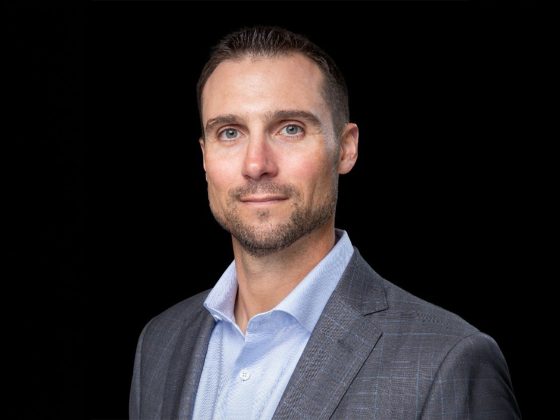
The first thing most sales leaders do when growth stalls is add headcount. Joshua David Farley has spent 25 years proving why that is the wrong answer. As Chief Revenue Officer at Bestmo, a global company transforming the robot mowing industry, Farley has led national and international sales organizations across multiple sectors. He has grown revenue from $50 million to more than $250 million, not by hiring faster or adding layers of management, but by building cultures, processes, and leadership models that make teams genuinely unstoppable.
The core issue in many sales organizations is not a lack of talent; it is a lack of infrastructure. Leaders often hire aggressively without first building repeatable processes. They set ambitious targets without removing the barriers that prevent teams from achieving them. As a result, revenue tends to grow in spurts rather than in a consistent, sustainable way because the underlying foundation cannot support scale. In Farley’s view, world-class sales organizations are built on three disciplines: culture that rewards innovation and accountability, processes that align sales with marketing and operations, and leadership that removes obstacles instead of simply working around them.
Culture Drives Performance, Not Compensation Plans
High-performing sales organizations begin with culture, not with commission structures. Culture is not a slogan or a slide in a presentation; it is the daily reality of how work gets done. It means setting clear expectations, providing teams with the tools and support they need, and holding everyone accountable for results. At TruGreen, Farley led teams across the United States and Canada by creating a culture that rewarded both innovation and execution. That focus on culture consistently produced double-digit growth across the business.
What culture did for those teams was something compensation plans and headcount alone could not achieve. It encouraged people in different regions to experiment with new approaches, to share what worked, and to hold each other accountable for performance. It created an environment where initiative was expected, not exceptional. Many sales leaders still assume culture is secondary to incentive plans. Farley’s experience suggests the opposite. Culture is not an accessory to performance; it is the engine that drives it.
Scale Through Process, Not Headcount
Building a global sales organization is not primarily a hiring exercise. It is a design challenge that depends on repeatable and scalable processes. For Farley, this begins with alignment. A sales strategy cannot live in isolation from marketing, operations, and customer success. To create a seamless customer journey, those functions need to share data, definitions, and expectations, so that the customer experiences one coherent organization rather than a collection of disconnected teams.
At Bestmo, the global sales strategy is built around this kind of alignment. Every market entry is grounded in data, local insights, and a clearly defined value proposition. The process outlines how to evaluate opportunities, how to adapt messaging for local buyers, and how to measure success in a consistent way across regions. This approach creates true scalability because new markets do not require reinvention every time. The organization operates from a shared framework that defines the essentials, while local teams retain the flexibility to tailor execution to what resonates in their own markets. By contrast, hiring more salespeople and hoping they figure it out typically produces uneven and unpredictable results. A process-driven approach to scaling creates visibility and predictability. Leaders know which levers influence outcomes and can adjust in a deliberate, systematic way rather than reacting to one-off performance spikes or dips.
Lead by Removing Obstacles
The most effective leaders do more than manage performance; they actively clear the path so their teams can perform at their best. “I believe in working alongside my team to identify roadblocks, streamline processes, and provide the mentorship needed for each individual to succeed,” Farley explains. “When leaders focus on enabling their teams, the organization becomes unstoppable.” This is servant leadership applied directly to sales. Instead of spending most of their time interrogating dashboards or demanding explanations for missed numbers, leaders who follow this model spend their time understanding what is actually slowing their teams down and then eliminating those obstacles.
Those barriers can take many forms: process friction that lengthens deal cycles, a lack of tools or resources that makes follow-up inconsistent, or misalignment between sales and other functions that creates confusion and friction for customers. Leaders who focus only on performance metrics tend to treat these issues as noise. Leaders who see their role as removing obstacles treat them as core responsibilities. The distinction is important. Leaders who only manage performance end up treating symptoms. Leaders who remove obstacles address root causes.
Be a Bulldozer
After 25 years building and scaling global sales organizations, Farley’s philosophy is straightforward but demanding. You build a culture that rewards innovation and execution. You design processes that can scale across markets without constant reinvention. And you lead in a way that removes the barriers that keep your teams from doing their best work “When you align these three elements, growth is not just possible, it becomes inevitable,” he says. The real question for sales leaders is no longer whether their teams have potential; most organizations are full of capable people. The question is whether leaders are creating the conditions for that potential to be converted into sustained performance. So the challenge becomes personal and immediate: What barriers can you remove today to help your team reach its full potential? Be a bulldozer.
Find Joshua David Farley on LinkedIn for insights on building and leading global sales organizations.