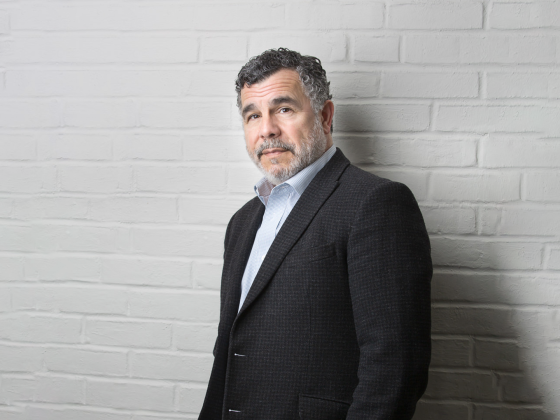
Most people run from chaos. Emergency medical professionals run toward it, bringing calm with them. That instinct, and the discipline required to sustain it under genuine life-or-death pressure, turns out to be exactly what most executive teams are missing. Joel Simmons, founder of the Tenacity Foundation, certified paramedic, and leadership coach with over three decades of experience, has spent his career at the intersection of two worlds that demand identical skills. The boardroom and the back of an ambulance both require clarity, control, and the courage to act decisively when the cost of hesitation is highest. “The pressure of the field and the pressure of the boardroom demand the same skills,” Simmons says. “Clarity, control, and courage.”
Decision-Making Is a Muscle, and Crisis Builds It
In emergency medicine, hesitation is not a personality trait. It is a liability. Every second carries consequence, and the environment trains professionals to cut through confusion, trust their instincts, and commit to action when all available information is incomplete. That is not a luxury available in emergency response. It becomes the operating standard. Simmons brings that standard into executive coaching. The leaders who struggle most under pressure do not lack intelligence or experience; they have never been forced to build the decision-making muscle that high-stakes environments develop by necessity.
In his work with executives, Simmons teaches the same mental discipline that emergency medical services (EMS) demand: the ability to assess, prioritize, and act without waiting for certainty that will never fully arrive. The skill transfers directly. The methodology for developing it is the same.
Composure Is Contagious, So Is Panic
The most powerful thing a leader does in a crisis is not the decision they make. It is the state they model. In emergency response, panic spreads faster than any instruction can counter it. A team that watches its leader lose composure loses its own capacity to function effectively within seconds. A team that watches its leader stay grounded takes that signal as permission to do the same.
Simmons learned to lower the temperature in high-stress moments long before he applied that skill to organizational leadership. “Staying grounded helps you model stability and confidence even in the middle of disruption,” he says. For executive teams navigating uncertainty, the leader’s emotional state is the most powerful input in the room. It is not soft leadership. It is operational leverage, and it is something EMS trains relentlessly, while most corporate environments never address directly.
Precision Communication Prevents Preventable Failures
In the back of an ambulance, miscommunication does not create inefficiency. It costs lives. That reality produces a communication discipline that most organizational environments never develop because the consequences of vague language, unclear ownership, and incomplete feedback loops are absorbed slowly and attributed to other causes.
Simmons teaches closed-loop communication, a protocol from emergency medicine in which every instruction is confirmed as received and understood before the next action begins. When applied to staff meetings, strategy sessions, and cross-functional execution, the same discipline saves time, builds trust, and eliminates the misunderstandings that quietly derail even well-designed plans.
“Clear communication saves time, builds trust, and prevents misunderstanding,” Simmons says. The stakes in a conference room are not the same as in an emergency. The cost of imprecision, however, compounds in both environments in entirely preventable ways. Leading like a responder is not about bringing adrenaline into the boardroom. It is about bringing awareness, adaptability, and composure that high-stakes environments develop in the people who work in them.
Follow Joel Simmons on LinkedIn for more insights on leadership under pressure, resilience coaching, and building executive teams that perform when it matters most.