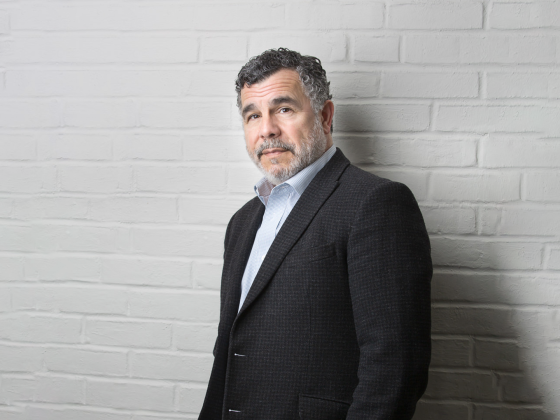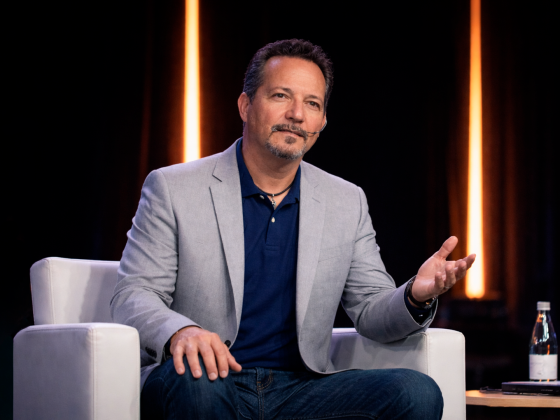
Every quarter, somewhere in a conference room, an executive team stares at a scoreboard that refuses to move and concludes it has a numbers problem. It rarely does. It has a leadership behavior problem that eventually showed up as a numbers problem, and the distinction matters because one can be fixed by pressure, and the other cannot. Mark Krajnik, Founder and Chief Executive Officer (CEO) of Performance Mindset Associates (PMA), argues that most organizations have built their entire performance apparatus around the output while leaving the inputs – attitudes, trust, clarity, accountability, and coaching – entirely unmanaged. The result is a class of senior people who are genuinely good at running a business and genuinely unpracticed at leading the people who run it. That gap is expensive, and it is widening as AI strips away the administrative work that used to disguise it.
The Great Divide Between Managing And Leading
Krajnik draws a hard line between managers of people and leaders of people, and it is not a line about who cares more about results. “Great leaders are relentlessly focused on results, but they understand that sustainable results are produced by people,” he says. The divide sits in where attention goes. A manager looks at the scoreboard. A leader asks what is happening underneath it: whether the team understands the mission, whether capability exists, whether expectations are clear, whether the right people sit in the right roles, whether anyone is being coached at all. “Results are an outcome. Leadership works on the conditions that create the outcome.”
The practical consequence shows up most sharply in how accountability gets handled. Managers enforce it after the fact, which produces the familiar postmortem: “You missed the target. What happened?” Krajnik wants it created before the fact, which sounds like a semantic difference until you watch the two conversations play out over a year. “What did you commit to? What got in the way? What did you learn? And what are you committing to next?” These questions form a sequence that builds a person. Asking why the number slipped builds a defense mechanism. His framing is blunt about the endgame: the point is to produce people who do not need someone standing over them. Managing gets compliance. Leadership creates commitment, and only one of those survives a bad quarter.
Why Senior Leaders Are The Last To Know
The costliest blind spot Krajnik sees in founders and C-suite executives is the assumption that competence at running the business transfers automatically to leading the people inside it. It does not. A founder can build a remarkable product and a C-suite executive can write a brilliant strategy without ever developing the capability to build a high-performing organization through other people. The skills that get someone to the top are not the same skills the top requires. Most executives never confront this because the outputs look fine for a while, and by the time the outputs stop looking fine, the underlying behaviors have been reinforced for years.
Krajnik’s diagnostic here is uncomfortable on purpose. “Your culture is often revealing the leadership behaviors you’re not seeing in yourself,” he says. High turnover, weak accountability, entrenched silos, quiet disengagement among the best performers: each of these tends to get externalized, blamed on the labor market, the employees, or a generational shift. He would rather executives look in the mirror first. The structural problem is that seniority insulates people from correction. The higher someone rises, the less unfiltered feedback reaches them, because people do not tell the CEO what the CEO needs to hear. That makes building an environment where the truth can travel upward one of an executive’s core responsibilities, not a cultural nicety. The leaders he considers strongest are not flawless; they are curious about their own impact – they seek feedback and they own mistakes. “The organization will rarely outperform the leadership behaviors being modeled at the top.”
Development That Survives The Workshop
Most corporate leadership development fails for a common reason: it happens once a year, in a room, and is disconnected from the moments where leadership is tested. Krajnik designs against that. His DRIVENx3 structure moves through three levels:
- Lead Yourself
- Lead Others
- Lead Your Enterprise
This program starts with the individual, because no one can lead others consistently without first learning to manage their own attitude and behavior. From there, the development moves outward to coaching, trust, psychological safety, conflict, and talent development. After that, it moves to enterprise thinking, breaking silos, influencing across a matrix, and creating alignment around a larger mission.
What separates a system from a program is what happens between sessions. Krajnik turns each framework into a set of questions that leaders can carry into ordinary work. For example, before a difficult conversation, leaders can ask:
- What behavior do I need to demonstrate?
- In a team meeting, am I creating accountability or simply giving direction?
- When performance drops, am I managing the number or developing the person?
- When someone succeeds, am I recognizing the result or reinforcing the behavior that produced it?
He then bolts on the piece most programs skip entirely. Leaders name the behaviors they are committed to improving and appoint an accountability partner or accountability team to hold them to it. They practice, apply, measure, take feedback, and adjust. “Don’t develop leaders once a year. Develop leadership every day,” he says. “The goal isn’t to create leaders who know more about leadership theory. The goal is to create leaders who behave differently when it matters.” That distinction becomes more urgent as AI absorbs the task management and information handling that once filled a manager’s calendar. What remains is trust, judgment, courage, connection, and coaching. Krajnik’s view is that technology does not diminish the need for those capabilities. It raises their price. Executives who want that advantage should start now: define the behaviors that represent great leadership in their organization, make coaching part of the operating rhythm, measure not only what leaders accomplish but how they accomplish it, and identify emerging leaders before they carry the title.
Follow Mark Krajnik on LinkedIn for more insights on executive leadership development, accountability, and building high-performance culture.