As software systems grow larger, complexity tends to follow. Releases slow down. Risk increases. Confidence erodes.
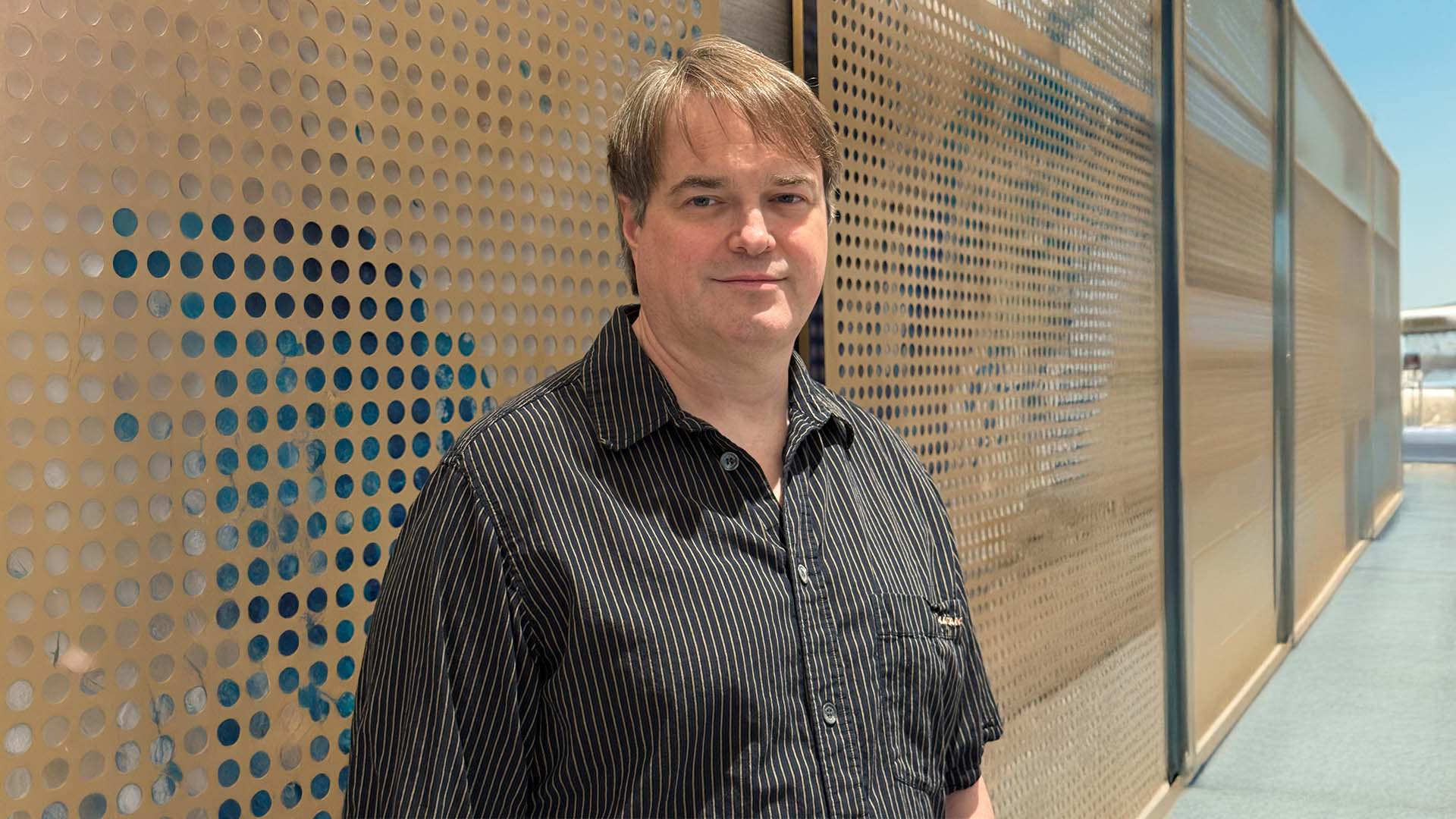
For Mike L. Swafford, Vice President of Software Engineering at Microsoft, that tension has defined much of his career and fueled a persistent question: Does building at scale really have to be this difficult?
From automating homework grading systems as a graduate student to helping Microsoft transition from boxed releases to continuous cloud deployment, Swafford has consistently focused on one outcome: enabling teams to move quickly without compromising reliability.
“The bigger the system, the harder it is to move fast and the easier it is to break things,” he explains. “But I spent my career asking two questions: does this have to be so difficult, and how can we do better?”
Across decades of engineering leadership, three principles have emerged as foundational to building software that is both fast and safe.
Build Systems That Catch Mistakes Early
Perfection is not a scalable strategy. Detection is.
“Quality starts with detection, not perfection,” Swafford says. “Mistakes are inevitable. But the ability to detect and recover quickly, that’s how you scale confidence.”
Early in his career, frustration with late-stage failures pushed him toward automation. Rather than trying to eliminate errors entirely, his teams focused on shortening the distance between mistake and discovery.
The result is faster recovery, lower risk, and far fewer cascading issues.
“Invest in automated validation, strong CI/CD pipelines, and feedback loops that work in hours, not days,” he advises.
Yet speed alone is not enough. Testing must reflect reality.
“You need to test what you’re shipping, not just what you built,” Swafford notes. “Blazing fast unit tests matter, but if that’s all you have, you’ll come up short. Complex systems must work end-to-end.”
When detection becomes embedded in the development lifecycle, confidence stops being aspirational and becomes operational.
Standardize the Fundamentals to Unlock Speed
Engineering culture often celebrates flexibility, but at scale, inconsistency creates drag.
“Speed doesn’t come from chaos, it comes from clarity,” Swafford explains.
At Microsoft, his organization unified more than 25,000 build and release pipelines into governed templates. The goal was not control for its own sake; it was liberation.
“That wasn’t just for compliance. It freed our teams from reinventing the wheel,” he says. “We removed red tape, reduced friction, and let engineers focus on solving real problems.”
Central standardization enabled sweeping improvements that once required years of distributed effort. “What previously took developer years across thousands of pipelines was done once,” Swafford recalls.
Among the outcomes were the automated generation of Software Bills of Materials (SBOM), artifact provenance supported by clear audit trails, release guarantees before production, and centralized security tooling with consistent enforcement.
“All of this was done centrally with no fan-out work to individual teams,” he says. “It gives customers peace of mind and makes audit trails straightforward.”
Swafford’s conclusion is direct and often counterintuitive, “Standardization isn’t the enemy of speed. It’s the foundation of it.”
Treat Developer Experience as Critical Infrastructure
Technology alone cannot produce high-quality software. The environment in which developers operate matters just as much.
“If you want high-quality software, invest in the people building it,” Swafford emphasizes.
At Microsoft, this philosophy led to Engineering Thrive, a company-wide initiative focused on improving how developers work and how they feel while doing it.
“We launched cloud-based dev boxes that made onboarding faster and development lighter,” he says. “We built environments that got out of the way and let engineers do their best work.”
Listening played a central role. “We listened to what developers were saying, and we acted on it.”
The payoff is both cultural and operational. “When developers are empowered, systems become safer, shipping gets faster, and quality takes care of itself.”
Designing for Confidence at Scale
Organizations often assume they must choose between velocity and reliability. Swafford sees that assumption as a design flaw rather than an unavoidable reality.
“Catch issues early, standardize your foundation, and treat developer experience as a critical system,” he advises. “With the right systems and culture, speed and quality don’t have to be a trade-off.”
Ultimately, the leaders who succeed at scale are not those who avoid complexity, but those who architect for it.
And the question that continues to guide Swafford’s work remains deceptively simple: “If you’re still asking yourself, ‘Does this have to be so difficult?’, that’s the best place to start.”
Connect with Mike L. Swafford on LinkedIn for more insights.