A process that once took 35 days can now be completed in five seconds. That single fact captures both the opportunity and the disruption facing insurance underwriting, and it explains why the question is no longer whether to automate but how to do so without dismantling the trust the business depends on. Underwriting is the core function of insurance, yet it remains burdened by legacy systems, fragmented data, and slow manual review. Automation is frequently presented as the obvious remedy, but when implemented poorly, it introduces risks as serious as the inefficiencies it aims to resolve.
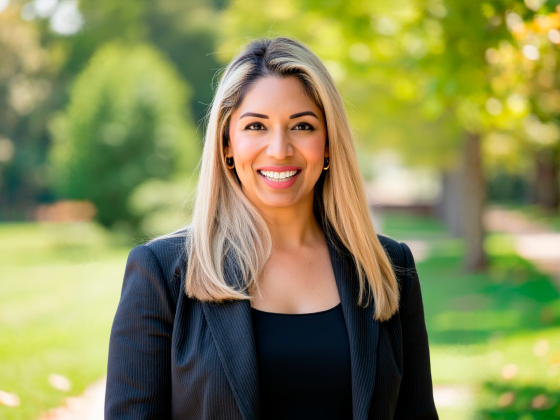
Dr. Deborah Wall has spent two decades across insurance, banking, and AI transformation, leading the development of enterprise-grade automation platforms at organizations including Prudential, New York Life, and Wells Fargo. Her work has delivered more than $250 million in business impact. “AI in underwriting isn’t just a tech upgrade,” Wall states. “It is a business imperative.” The insurers that treat it as a mere systems upgrade are the ones whose initiatives fail.
Automate the Right Use Cases First
The most common reason underwriting automation programs stall is that they begin in the wrong place, targeting complex, high-risk decisions because those represent the largest perceived prize. The result is an ambitious initiative that struggles to demonstrate value and loses organizational support before it matures. Wall advocates the opposite approach. Begin with high-volume, low-risk workflows where automation can prove itself cleanly and quickly.
A well-chosen first use case delivers measurable results, builds institutional confidence, and establishes the foundation for more ambitious applications. When Wall led the development of Prudential’s life insurance automation system, the team began with group life applications that could be automatically approved based on prescription history and application data. “That single use case cut decision time from over a month to seconds and drove five million in profit uplift,” she notes.
The discipline is to resist the temptation of the hardest problem first, and instead select the workflow where speed and accuracy can be demonstrated without introducing unacceptable risk. Early, credible success is what earns an organization the mandate to expand.
Data Precision Determines the Quality of the Decision
Underwriting automation is only as sound as the data beneath it, and this is where many programs reveal their weakness. An AI system trained on incomplete or disconnected information will produce decisions that are fast and unreliable, which is a worse outcome than slow and accurate. Effective underwriting AI requires data that is clean, connected, and sufficiently rich to support a genuine assessment of risk.
That standard extends well beyond traditional claims and application information. “You need pharmacy histories, wearable data, and even behavioral insights,” says Wall. She explains that these data should be integrated and modeled in a way that produces decisions that are both accurate and explainable.
At New York Life, she created a blueprint for ingesting and modeling these varied data sources precisely to support that depth of decision-making. The point is that data integration is not a preliminary technical task to be completed before the real work begins. It is the foundation that determines whether the resulting automation can be trusted at all.
Build for Trust, Not Only Speed
The most important principle is the one that separates a durable underwriting platform from a liability. Speed without explainability depletes confidence, and in a regulated industry, that depletion carries consequences far beyond any efficiency gained. An automated decision that cannot be explained is not an asset. It is an exposure waiting to surface in a regulatory review or a disputed claim.
This is why Wall embeds transparent decision paths and human-in-the-loop options into every underwriting AI product her teams deliver. The requirement reflects the reality that underwriting serves three constituencies at once. “Regulators need to understand it,” Wall states. “Underwriters need to trust it. And customers deserve to benefit from it.” The value AI creates in underwriting depends on building systems that are fast, fair, and trustworthy in equal measure. Executed with that discipline, automation transforms decision-making from a source of delay into a competitive differentiator.
Follow Dr. Deborah Wall on LinkedIn for more insights on AI automation, underwriting modernization, and building enterprise AI systems that are fast, fair, and trustworthy.