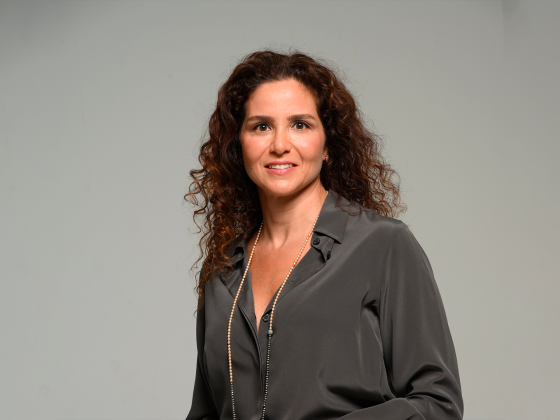
The early childhood classroom is one of the last corners of American education that has been allowed to stand still. Curriculum standards have been rewritten, testing regimes built and dismantled, and the technology in a five-year-old’s home has been transformed beyond recognition, yet the preschool room itself looks much as it did three decades ago: worksheets on the tables, a circle time rug in the corner, and a queue of children waiting for permission to speak. Shannon Penrose, who leads Growing Brilliant, argues that the stagnation is not cosmetic. It has quietly redefined what readiness means, reducing it to a recitation test, and the cost is showing up in attendance data, in engagement, and in how children learn to relate to school itself.
Readiness Is A Posture, Not A Checklist
The prevailing definition of kindergarten readiness is an inventory. Letters, numbers, colors, shapes. It is easy to measure, easy to report, and easy to defend to a parent who wants evidence that tuition is buying something. Penrose’s objection is that the inventory measures the wrong thing entirely. “Readiness for kindergarten isn’t something a child accumulates by memorizing enough letters and numbers,” she says. “It’s a posture, built by the conditions adults create around a child.” The distinction matters because a posture cannot be crammed. It is a byproduct of the environment, which means the classroom design is not a delivery mechanism for readiness. It is the cause of it, or the obstacle to it.
What most rooms are producing, in her reading, is compliance. “Kids sit. They wait. They follow directions,” Penrose says. “They’ve become passengers in their own education, when what they need to become is navigators of their own learning journey.” That word, passengers, is doing real work. A passenger is not disengaged through any fault of their own; they have simply been placed in a seat where agency is neither required nor rewarded. Train a four-year-old for a year in that seat and the habit hardens well before anyone thinks to assess it. The industry has been measuring output, while ignoring the disposition that determines whether any of it holds.
Chronic Absenteeism Is A Verdict On The Room
Penrose draws a line from that classroom design to a problem most districts treat as a discipline and enforcement issue. “It’s a big part of why we’re living through a chronic absenteeism epidemic,” she says. “Kids and families vote with their feet, and they’re telling us school isn’t worth the trip.” The framing reassigns responsibility in a way that will be uncomfortable for administrators. If absence is a behavior problem, the response is letters, truancy officers, and consequences. If absence is a judgment about value, none of that touches the cause. Families are performing a cost-benefit calculation, and the room is losing it.
Her prescription is blunt. “You can’t mandate your way out of that. You have to make the room worth walking into.” For operators and district leaders, this reorders the entire improvement agenda. Attendance stops being a compliance metric to be defended in board meetings and becomes the clearest available signal of whether the instructional experience is any good. A classroom where families choose to show up is passing a test that no readiness assessment administers. One that requires escalating enforcement to fill its seats is failing a test that nobody has formally scored.
The Argument Over Screen Time Is The Wrong Argument
Growing Brilliant runs live, interactive virtual preschool: a real teacher, a small group, and real-time exchange. Penrose is clear-eyed about the reflex this provokes. “‘Screen time’ has become a dirty word for parents, and for good reason. Most of what shows up on a screen is designed to hold a child’s attention, not to grow it.” That is the sharper distinction, and it applies far beyond her own model. Holding attention and growing it are opposing design goals, and the debate about hours has obscured the fact that almost nothing on a child’s device was engineered for the second one. “The real question was never screen time versus no screen time,” she says. “It’s whether that time is actually worth a child’s time.”
The format she describes is deliberately small and what she calls “microdose learning.” Structured, teacher-guided instruction runs for 45-minute sessions, which are disguised as play, and built around a specific skill, after which the child departs. “Think of each session as a departure hub, not a destination,” Penrose says. The claimed results are specific. Independent research and the company’s own efficacy studies, she says, show children attending consistently for a year achieve up to 35 percent greater improvement in early reading and math skills than peers who attend no preschool, with up to 15 percent improvement visible after six weeks of consistent attendance. Her point is not that virtual beats physical. It is that duration was never the variable anyone should have been optimizing, and that a short, well-designed, teacher-led block can outperform a long unexamined one. “That combination, small dose, real design, real teacher, is what makes it disguised learning that truly makes an impact.”
Underneath the numbers sits the outcome that Penrose says no assessment captures, and the one her whole argument rests on: “a lit-up, durable love of learning.” That is the asset the compliance model spends down without recording it as a loss. “We can keep building passengers,” she says. “Or we can raise navigators of their own learning journey, one departure at a time.”
Follow Shannon Penrose on LinkedIn for more insights on early childhood education, kindergarten readiness, and reimagining the preschool classroom.