Life sciences sales teams are not losing ground because they lack talent or effort. They are losing ground because they are still operating on instinct in an environment where the data required to make smarter decisions is already available, often free, and almost entirely unused.
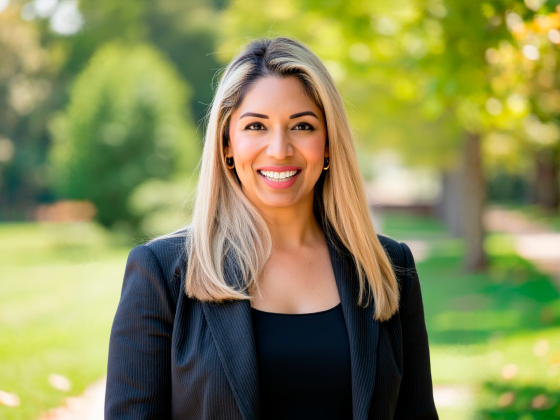
Sadaf Malik, Head of Global Sales for the Biobank and Biomarkers Division at Crown Bioscience, has spent over a decade at the intersection of oncology and commercial strategy, from hands-on cancer research to business development across biotech. According to Sadaf, “The leaders who will drive the most revenue in the coming years are not the ones relying on instinct alone. They are pairing human insight with practical AI tools that enable smarter, quicker decisions.”
Targeting the Right Accounts Before the Window Opens
In life sciences, sales cycles are long, and timing is everything. The difference between a deal and a missed opportunity often lies in whether a team showed up when the need was emerging or after it had already been addressed by someone else. AI makes it possible to identify that window before it opens. Free tools already available to most teams can track signals indicating rising R&D budgets and near-term buying intent, such as recent funding rounds, new oncology biomarker publications, clinical trial registrations, and newly awarded grants.
Setting up Google Alerts or using Crunchbase’s free tier to monitor these signals requires no technical investment. The intelligence gathered can then be fed into a generative AI tool with a straightforward prompt, asking it to rank accounts by revenue potential based on recent activity and highlight the highest-priority targets for the current week.
The result Sadaf’s team consistently sees is a two- to threefold improvement in response rates, with the pipeline moving earlier and faster, because outreach is timed to genuine emerging need rather than an arbitrary cadence. Shifting from broad reactive outreach to targeting ten to fifteen high-signal accounts each week is not a technology transformation. It is a discipline change enabled by tools that are already free.
Personalization That Scales Without Losing Credibility
Life science buyers are sophisticated. They ignore generic outreach immediately and respond to relevance. The challenge for sales teams operating at scale is producing that relevance without it consuming the time required to actually sell. Before any discovery call, Sadaf’s team uses AI to pull recent publications, clinical trial activity, and company news, then generates three tailored talking points that connect the buyer’s specific research priorities to the team’s biobank and biomarker capabilities.
The prompt is specific: summarize the most recent publications and trials from a target company in oncology biomarkers, then suggest personalized talking points that emphasize relevant differentiators like turnaround time and regulatory expertise. The output arrives in minutes. The rep brings the relationship and the oncology knowledge that no model can replicate. “Reps tell me they get longer meetings, more follow-ups, and stronger credibility,” Sadaf says, “because the message feels genuinely relevant, not templated.” AI provides the intelligence. The human brings the expertise that makes that intelligence land.
Protecting Pipeline Before Deals Go Cold
Revenue predictability in biotech is notoriously difficult. A single deal can swing an entire quarter, and by the time a risk becomes visible in a standard review, the opportunity to intervene has often passed. AI changes that dynamic by flagging deterioration early enough to act on it.
CRM platforms, including HubSpot and Salesforce, have built-in predictive features that identify engagement drop-offs, stalled deal velocity, and accounts with no recent activity. For teams on lighter setups, exporting pipeline data into Google Sheets and using Gemini to analyze it produces the same early warning signals at no cost.
The discipline of reviewing flagged risks in a weekly team huddle, then coaching proactively rather than reactively, is what Sadaf describes as the difference between good quarters and consistently great ones. In a business where a single partnership can transform the trajectory of an entire team, catching a deal before it goes cold is not a minor operational improvement. It is a revenue protection strategy.
Predictive and generative AI are not a threat to great sales professionals in life sciences. They are a multiplier of the expertise those professionals already have. The teams treating them that way are moving faster, converting more, and doing it with significantly less waste.
Follow Sadaf Z. Malik on LinkedIn for more insights on AI-driven commercial strategy, life sciences sales leadership, and biotech revenue acceleration.