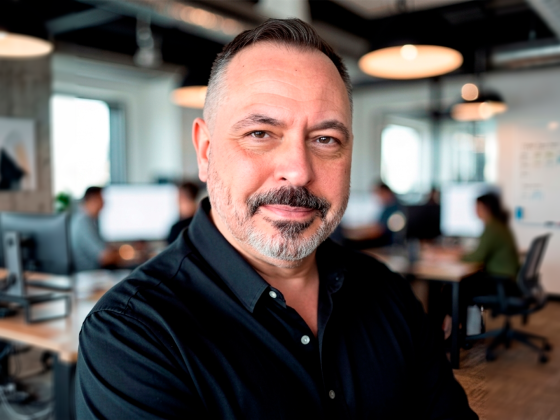
Every measurable element of a transformation belongs to the technology. Budget consumption, integration milestones, system performance, and migration completeness all produce numbers that a steering committee can review by morning. Adoption produces nothing until months after launch, by which point the program has closed and the team has dispersed. Ram Shenoy, Chief Innovation Officer at Industrial Metal Supply Company, has spent two decades watching that asymmetry decide the outcomes.
Leaders are not neglecting the human element out of indifference. They are managing the half of the program that reports back to them, while the half that determines whether or not the system works stays silent – until the moment for intervention has passed. His conclusion after leading large-scale transformation across financial services, retail, manufacturing, and hospitality in the U.S. and Europe is that technology is rarely the hard part.
Change Management Is the Work, Not a Work Stream
Most programs treat change management as a supporting function with a communication plan attached and a training module scheduled near the end. Shenoy rejects the category outright. “Change management is not a work stream; it is the work,” he says.
The placement matters because of what it signals about sequencing. When an organization fundamentally changes how people work, that change is the substance of the program rather than an accompaniment to it. Shenoy has watched well-funded transformations fail because leadership underestimated how much people needed to understand the “why” before they could embrace the “what.”
What follows from getting it wrong is entirely predictable. People who feel informed and involved adopt faster, while people who feel transformation is being done to them resist, and neither response depends on the quality of the platform. An organization that delivers excellent technology to an uninformed workforce has spent heavily to purchase resistance.
Data Identifies the Problem, People Explain It
Transformation generates enormous volumes of behavioral, performance, and customer data. This is why Shenoy has seen leaders become so absorbed in what the numbers report that they stop hearing what their people are experiencing. His division of labor between the two sources is exact. The best transformation leaders he has worked with use data to identify the problem and human insight to understand it, which requires being in the rooms, having the conversations, and asking the questions a dashboard cannot answer.
The practical value is speed of signal. A metric will eventually show that adoption fell in one division without ever explaining the cause, and the explanation usually sits with someone who could have supplied it weeks earlier had anyone asked. That combination of empathy and evidence is what produces decisions that hold up in the real world, rather than decisions that hold up in a review.
Naming What Stays the Same
Changing an operating model puts the culture that made an organization successful at risk, including the relationships, trust, and sense of shared purpose. Shenoy believes the consequence goes further than the usual warning, since transformation that ignores culture does not merely slow down; in fact, it often reverses.
Leaders who navigate it well are deliberate about what they are preserving even while changing everything else. They communicate constantly, celebrate the people driving the change, and make clear that the mission has not shifted even when the methods have. That final point carries the most weight. A workforce watching every familiar process disappear will assume the purpose disappeared with it unless someone says otherwise, repeatedly and in plain terms. Silence gets interpreted, and rarely charitably.
Digital transformation is a human endeavor first and a technology endeavor second. Align people before rolling out the platform, lead with empathy alongside the data, and protect the culture with the same energy directed at the infrastructure. Each of those exists to generate signal from the part of the program that will not report itself, and an organization that waits for adoption numbers has waited too long to use them.
“That is not soft leadership,” Shenoy says. “That is smart leadership.” To learn more, connect with Ram Shenoy on LinkedIn.